CIOReview APAC Weekly Brief
Be first to read the latest tech news, Industry Leader's Insights, and CIO interviews of medium and large enterprises exclusively from CIOReview APAC
A featured contribution from Leadership Perspectives: a curated forum reserved for leaders nominated by our subscribers and vetted by the CIOReview Advisory Board.

ltd
Shaping the Future of Enterprise IT: Strategy, People and Innovation
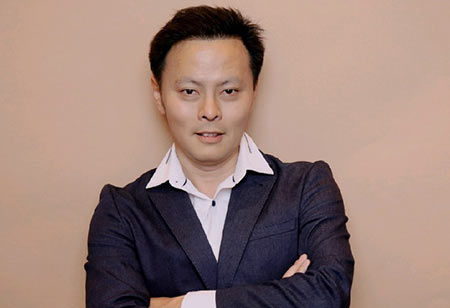
From IT Foundations to Driving Cross-Sector Innovation
My journey to the CIO role has been shaped by three core evolutions—from technologist to strategist, from executor to value driver, and from manager to people leader.
I began in technical operations, building scalable infrastructure and managing complex systems across manufacturing and retail sectors. That grounding taught me not just how systems run, but how failure affects business continuity. From there, I transitioned to enterprise architecture and digital transformation, where I led cross-functional initiatives—CRM, automation, ERP upgrades—always ensuring they were aligned with business value, not just technical specs.
The most defining shift came when I adopted a commitment-based management philosophy: every promise—internal or external—must be fulfilled with discipline and on time. I’ve built teams, cultures, and delivery systems around this principle.
Today at Thairung Partners Group, I act as a translator between business vision and technology execution, ensuring that IT is not just reactive, but a strategic growth engine.
Prioritization begins with a disciplined evaluation of value and strategic fit. In a diversified group like ours, ideas are abundant—but execution must be selective.
We use a structured evaluation framework, asking:
• Will this project generate revenue or reduce cost in measurable terms?
• Will it enhance customer or employee satisfaction?
• Is it mandatory due to regulatory, cybersecurity, or system obsolescence concerns?
Only initiatives that pass this filter move forward. Then comes commitment. Every approved project must have a clear due date, assigned owner, and defined measurable success metrics.
This discipline allows us to confidently invest in high-impact projects while aligning IT resources with business urgency and strategic direction.
From Legacy Systems to Lasting Change:
We encounter three main areas of challenge in our transformation journey—each requiring a distinct leadership response:
Legacy Systems & Integration: Many traditional businesses rely on outdated platforms. We overcame this by designing modular APIs and gradually decoupling core functions before sunset.
Operational Disruption (Job Replacement by Technology): Automation can unintentionally create workforce anxiety or displacement. We address this through structured human capital planning.
• Every automation or AI-driven initiative is jointly reviewed with the Head of Department and HR to anticipate workforce impact.
• We align transformation projects with Organization Development (OD) goals, identifying reskilling opportunities rather than replacements.
• This ensures people transformation evolves alongside technology, preserving morale and workforce continuity.
Organizational Resistance: Resistance often stems from lack of understanding, fear of failure, or historical fatigue from change initiatives. To overcome this:
• We lead with clarity—quantifying expected outcomes such as hours saved, errors reduced, or satisfaction improved.
• We involve stakeholders early through co-creation workshops, ensuring ownership and transparency.
Our leadership model is commitment-based, meaning we deliver on what we promise. When the organization sees repeated, credible execution, resistance turns into partnership.
Driving Change Across Manufacturing and Mobility
The convergence of intelligent automation, data-driven systems, and connected devices is reshaping the landscape of traditional industries—particularly manufacturing and mobility. Key trends we’re actively leveraging include:
AI-Powered Automation: AI is no longer experimental—it’s embedded into our operations. From predictive maintenance in production plants to intelligent lead generation and chatbots in our customer support area. AI helps reduce downtime, increase accuracy, and elevate customer experience.
AI in Software Development Frameworks: We have embedded AI into our software development lifecycle to enhance productivity, ensure code quality, and accelerate time-to-market. From intelligent code suggestions to automated testing, AI is helping our teams work smarter and deliver with higher consistency.
Internet of Things (IoT): In both manufacturing and fleet operations, IoT is a game changer. Sensor-driven data is used to monitor machine health, optimize maintenance schedules, and enhance safety compliance. On the manufacturing side, real-time monitoring improves operational visibility and quality control.
Robotics: Automation through robotics is accelerating efficiency in warehousing, vehicle inspection, and production workflows. These systems reduce manual errors, increase throughput, and support around-the-clock operations. Our roadmap includes integrating robotics with AI and IoT platforms to enable autonomous decision-making and closed-loop feedback systems.
To stay ahead, we invest in continuous tech exploration, host internal AI hackathons, and foster cross-functional learning. This ensures our teams don’t just follow trends—they shape them.
• Be ruthlessly clear about your commitments. Trust is your currency. Deliver what you promise, or renegotiate early.
• Don’t fall in love with tech—fall in love with outcomes. The best IT leaders translate systems into business value, not just specifications.
• Time is your scarcest resource. Manage it before you manage people. Buffer realistically. Respect others’ time too.
• Quantify Impact: Every project should be justified with measurable business value in Financial (Create revenue or cost reduction), Operational Excellence (Manpower Saved by Digitalization), or Improvement of Customer/Employee Experiential.
• Stay human. Treat teammates, partners, and users with fairness and respect. In a high-turnover industry, culture is what keeps people.
Great CIOs are not just technologists. They’re outcome owners, people developers, and trust builders. If you get that right, everything else follows.
Driving Change Across Manufacturing and Mobility
The convergence of intelligent automation, data-driven systems, and connected devices is reshaping the landscape of traditional industries—particularly manufacturing and mobility. Key trends we’re actively leveraging include:
AI-Powered Automation: AI is no longer experimental—it’s embedded into our operations. From predictive maintenance in production plants to intelligent lead generation and chatbots in our customer support area. AI helps reduce downtime, increase accuracy, and elevate customer experience.
AI in Software Development Frameworks: We have embedded AI into our software development lifecycle to enhance productivity, ensure code quality, and accelerate time-to-market. From intelligent code suggestions to automated testing, AI is helping our teams work smarter and deliver with higher consistency.
Internet of Things (IoT): In both manufacturing and fleet operations, IoT is a game changer. Sensor-driven data is used to monitor machine health, optimize maintenance schedules, and enhance safety compliance. On the manufacturing side, real-time monitoring improves operational visibility and quality control.
Robotics: Automation through robotics is accelerating efficiency in warehousing, vehicle inspection, and production workflows. These systems reduce manual errors, increase throughput, and support around-the-clock operations. Our roadmap includes integrating robotics with AI and IoT platforms to enable autonomous decision-making and closed-loop feedback systems.
To stay ahead, we invest in continuous tech exploration, host internal AI hackathons, and foster cross-functional learning. This ensures our teams don’t just follow trends—they shape them.
• Be ruthlessly clear about your commitments. Trust is your currency. Deliver what you promise, or renegotiate early.
• Don’t fall in love with tech—fall in love with outcomes. The best IT leaders translate systems into business value, not just specifications.
• Time is your scarcest resource. Manage it before you manage people. Buffer realistically. Respect others’ time too.
• Quantify Impact: Every project should be justified with measurable business value in Financial (Create revenue or cost reduction), Operational Excellence (Manpower Saved by Digitalization),or Improvement of Customer/Employee Experiential.
• Stay human. Treat teammates, partners, and users with fairness and respect. In a high-turnover industry, culture is what keeps people.
Great CIOs are not just technologists. They’re outcome owners, people developers, and trust builders. If you get that right, everything else follows.
